Selasa, 25 Juni 2019

FedEx sues US government over export controls after Huawei problems - Ars Technica

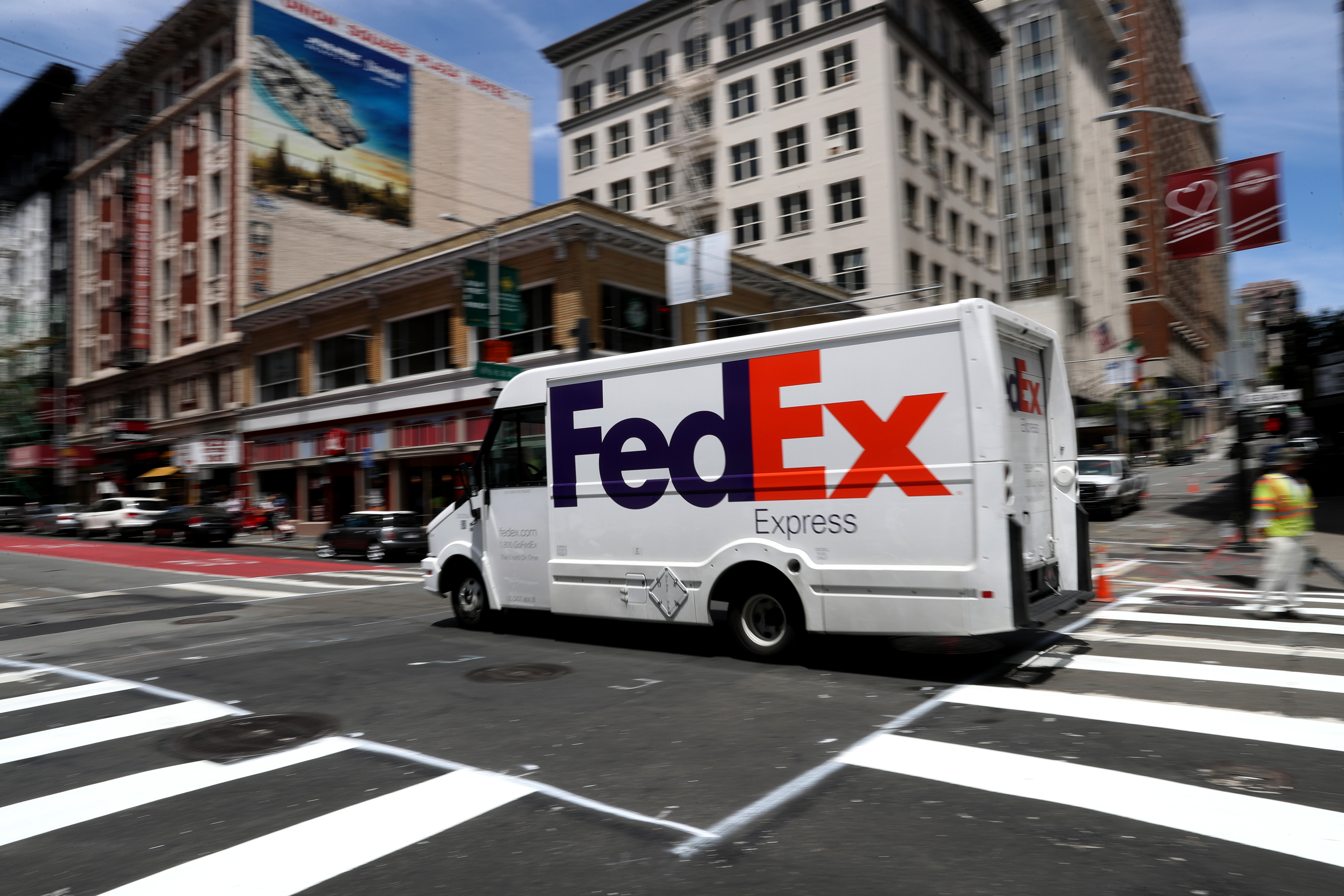
A FedEx delivery vehicle drives through a city street.

Federal Express is suing the US Department of Commerce, arguing that US export control laws are so onerous that it's impossible for FedEx to comply with them. US laws "require considerably more screening than possible from common carriers like FedEx," the company argues in a legal complaint filed in a DC federal court on Monday.

The lawsuit doesn't mention Huawei, but it was filed after a string of disputes between FedEx and Huawei that may be connected to US export control laws.

FedEx is one of the many international companies feeling pressure from the escalating trade war between the United States and China. Last month, the Trump administration added Huawei and its affiliates to an "entity list" under export control law. That made it illegal to ship a range of US-made technology to Huawei.

FedEx argues that US export control laws are impossibly burdensome for a common carrier like FedEx. Theoretically, FedEx says, the law requires FedEx to determine whether any package violates the law by shipping US technology to a proscribed entity. However, FedEx says, most of its packages are sealed before shipment. Searching them all would not only be expensive—it could also violate laws protecting the privacy of packages.

FedEx wants the courts to declare the export control law unconstitutional, at least as it applies to common carriers like FedEx.

Interestingly, Fedex rival UPS does not seem to agree with Fedex's argument.

"We have not had any particular issues with shipping for Huawei or any of our other customers, and we would not be supportive of joining such a lawsuit or making such claims," a UPS spokesman told The Wall Street Journal.

The Huawei connection is murky

Since the Trump administration added Huawei to its export control list last month, FedEx and Huawei have become embroiled in a series of disputes over mishandled shipments.

In mid-May, Huawei accused FedEx of diverting two packages shipped from Japan to the United States, instead of delivering them to Huawei offices in China. The smartphone giant said that FedEx was planning to do the same thing with two other Huawei packages, also bound for Huawei offices in China. But for reasons that aren't clear, the packages were returned to their senders in Vietnam instead.

Last week, Fedex became embroiled in controversy for sending a Huawei phone bound for the United States back to its sender in the United Kingdom. The phone was sent by a UK journalist at PC Mag to the magazine's New York office. After arriving at a FedEx facility in Indiana, the phone was flown back to Britain.

A note attached to the returned package said "parcel returned by FedEx, due US government issue with Huawei and China government."

FedEx said it didn't generate the note and that all of these incidents were isolated mistakes—not reflections of FedEx policies.

The FedEx lawsuit is being widely reported as a response to these Huawei shipping snafus, but it's not clear that they're actually connected. Huawei says that the packages diverted in May had important corporate documents, not hardware that could be subject to US export restrictions. And US export laws shouldn't restrict the ability of a British journalist to send a legally purchased Huawei phone to colleagues in the United States.

Last year, FedEx was fined for 53 violations of federal export-control regulations. Those violations involved the shipment of 52 airport parts to France in 2011 and an electron microscope to Pakistan in 2012.

What we don't know is what kind of behind-the-scenes conversations FedEx is having with the Trump administration. The US government may be pressuring FedEx to step up its screening activities against Huawei. But Monday's FedEx lawsuit doesn't say that.

Let's block ads! (Why?)


https://arstechnica.com/tech-policy/2019/06/fedex-sues-us-government-over-export-controls-after-huawei-problems/

2019-06-25 22:19:00Z
52780318695974

Consumer confidence drops to lowest level since September 2017 - Yahoo Finance

Consumer confidence drops to lowest level since September 2017

Consumer confidence is on the decline.

The Conference Board’s Consumer Confidence Index tumbled to 121.5 in June, dropping from a downwardly revised reading of 131.3 in May and snapping three consecutive months of improvements.

June’s results missed consensus expectations for a reading of 131.0, according to Bloomberg-compiled data, and marked the lowest level in nearly two years.

Indices tracking consumers’ assessments of current and future business conditions also sharply declined in June, the Conference Board reported. The Present Situations Index fell 8.1 points to 162.6 in June, while the Expectations Index decreased 10.9 points to 94.1.

The Conference Board’s report comes amid mounting friction between the U.S. and some of its major trade partners. These ongoing geopolitical concerns and the uncertainty over their resolution rattled consumers in June, according to the Conference Board.

“The decrease in the Present Situation Index was driven by a less favorable assessment of business and labor market conditions,” Lynn Franco, senior direct of economic indicators at the Conference Board, said in a statement. “The escalation in trade and tariff tensions earlier this month appears to have shaken consumers’ confidence.”

“Although the Index remains at a high level, continued uncertainty could result in further volatility in the Index and, at some point, could even begin to diminish consumers’ confidence in the expansion,” Franco added.

According to the Conference Board, the percentage of consumers expecting business conditions to improve six months from now decreased by 3.3 percentage points in June to 18.1%. Those expecting business conditions to worsen rose 4.3 percentage points to 13.1%.

“It is a disappointing outcome given that expectations ought to have received a boost from the drop back in gasoline prices and renewed surge in the equity market back to record highs,” Michael Pearce, senior U.S. economist for Capital Economics, wrote in a note.

However, the Conference Board’s steep decline in its June confidence index may be short-lived, according to other analysts.

The indices tracking consumers’ assessments of expectations and current conditions “are driven by different forces, with expectations responding to the stock market and gas prices, while current conditions tend to reflect the unemployment rate. So when both move sharply in the same month, it often indicates a response to other external forces,” Ian Shepherdson, chief economist for Pantheon Macroeconomics, explained in a note.

Namely, the most recent survey encompassed part of the period from late May to early June during which the Trump administration threatened to impose tariffs on imports from Mexico. These plans were walked back on June 7.

“We're guessing that the Mexico tariff fiasco, which also triggered steep drops in business surveys conducted while the tariff threat was live, is responsible,” he said. “If we’re right, the confidence index will rebound strongly in July, unless the Osaka [G20] summit is a disaster and the president imposes tariffs on imported Chinese consumer goods.”

“For now, note that the index remains very high by historical standards even after this decline, and it is no threat to our view that consumers' spending will continue to rise at a solid pace,” he said.

Emily McCormick is a reporter for Yahoo Finance. Follow her on Twitter: @emily_mcck

Read more from Emily:

Follow Yahoo Finance on Twitter, Facebook, Instagram, Flipboard, LinkedIn, and reddit.

Let's block ads! (Why?)


https://finance.yahoo.com/news/consumer-confidence-drops-to-lowest-level-since-september-2017-140725759.html

2019-06-25 14:07:00Z
52780320964250

Amazon announced the date of Prime Day, and it sounds like Alibaba’s Singles Day - Yahoo Finance

Close-up of logo for Amazon Prime deals on Prime Day, on a paper on a light wooden surface, San Ramon, California, July 18, 2018. (Photo by Smith Collection/Gado/Getty Images)

Amazon just released the dates of Prime Day – and this year the sale event will be the longest ever, lasting a full two days.

Prime Day, the annual shopping event for Prime members, will run July 15 to 16. Like previous years, the best deals usually feature Amazon’s own products, like the Amazon Fire TV and the Echo smart speaker. An early deal, Toshiba HD 43-inch Fire TV Edition Smart TV, is selling at $179.99, 40% off the regular price.

Amazon (AMZN) started Prime Day in 2015, and it has evolved as the Seattle e-commerce giant’s business footprint expands. In the early years, the main purpose of Prime Day was to attract more people to sign up for Prime, which now costs $119 a year and gives members free 2-day shipping among other perks. Now 59% of U.S. households are Prime members, according to RBC Capital Research. Prime Day has put more focus on engaging members and increasing their spending on the platform. The deals also expanded from online to stores like Whole Foods.

Amazon wants its users to get comfortable with voice shopping, so this year it has pushed some early access to deals only available through its smart speaker Alexa. Amazon also touts one-day delivery on more than 10 million products. The company announced in April it is investing $800 million in the second quarter to speed up delivery times.

Singles Day similarities

BROOKLYN, NY - JULY 11: Guests attend the Amazon Music Unboxing Prime Day event on July 11, 2018 in Brooklyn, New York. (Photo by Kevin Mazur/Getty Images for Amazon)

To spice up the shopping holiday, Amazon seems to have borrowed a page from Alibaba’s playbook, promoting offerings beyond deals that are similar to the Chinese e-commerce giant’s Singles Day.

Started a decade ago, Singles Day is the biggest one-day shopping holiday in the world, scoring $30.8 billion in sales last year. The event usually kicks off with a four-hour gala featuring celebrities both from China and overseas, including Nicole Kidman and Mariah Carey. Alibaba’s Tmall has been working with brands like Mars to launch new products.

For the first time, Amazon is also selling exclusive launches and collaborations on Prime Day, both online and in-store. Levi’s will drop a special version of its iconic jeans designed by football player Sterling Shepard and model Chanel Iman Shepard. In its release Amazon also teased “special performances” and “great entertainment.” Last year, Amazon Music hosted an Unboxing Prime Day concert in New York featuring Ariana Grande and Alessia Cara days ahead of the sale event.

“Our vision is that Prime Day should be the absolute best time to be a member – when you can enjoy shopping, savings, entertainment and some of the best deals Prime members have ever seen,” said Jeff Wilke, head of Amazon Worldwide Consumer.

Krystal Hu covers technology and China for Yahoo Finance. Follow her on Twitter.

Read more:

Read the latest financial and business news from Yahoo Finance

Follow Yahoo Finance on Twitter, Facebook, Instagram, Flipboard, SmartNews, LinkedIn, YouTube, and reddit.

Let's block ads! (Why?)


https://finance.yahoo.com/news/amazon-announced-the-date-of-prime-day-134047359.html

2019-06-25 13:40:00Z
52780319626375

FedEx sues US over mandate to monitor Huawei shipments - Engadget

Sponsored Links

Alexander Shcherbak\TASS via Getty Images

FedEx has already been accused of diverting Huawei's shipments, and it's not keen on dealing with more complaints. The courier has sued the US Commerce Department (including Secretary Wilbur Ross and Assistant Secretary Nazak Nikakhtar) to absolve itself of the need to monitor packages for potential export violations by Huawei and other companies. It argued that the requirement not only violated the Constitution's protections for due process, but was technically unfeasible given the scale of FedEx's operations.

The company handles about 15 million packages every day, according to the complaint, and it would be a "virtually impossible task" to inspect all of them. It might sometimes violate privacy rights and laws. And without safe harbor protections, FedEx believes it's in a no-win situation where it either risks "immediate" fines and penalties from the US or deals with the wrath of foreign governments and its own customers.

FedEx didn't mention Huawei by name in the lawsuit, although there's little doubt that the Chinese company is the focus of the case. The placement of Huawei on the Commerce Department's Entity List, which bars US companies from doing business without explicit permission, forced numerous businesses to either sever ties with the company or stay on guard like FedEx has.

The Commerce Department told the Wall Street Journal it hadn't yet reviewed FedEx's suit, but said it planned to defend its role in national security. You can expect it to contest the accusations, then. And that may leave FedEx in a tough spot when China is drafting its own 'unreliable entities' list that might punish companies for complying with US orders.

Let's block ads! (Why?)


https://www.engadget.com/2019/06/25/fedex-sues-us-commerce-department-over-huawei/

2019-06-25 13:17:16Z
52780318695974

AbbVie Strikes Deal to Buy Allergan for About $63 Billion - The Wall Street Journal

Botox maker Allergan has a market capitalization of $42.47 billion, based on Monday’s close, according to FactSet. Photo: Richard Drew/Associated Press

AbbVie Inc. ABBV -0.42% has reached a deal to buy Allergan AGN -0.95% PLC for about $63 billion, as the two big drugmakers bet a combination will deliver new sources of growth they have struggled to find on their own.

The takeover is worth about $188 a share in cash and stock, the companies said in a statement. The price represents a 45% premium over Allergan’s closing share price Monday of $129.57. If not for a surge in the shares in recent days on expectations for a breakup of the company, the premium would be even bigger.

The Wall Street Journal reported earlier Tuesday that the deal was imminent.

Buying Dublin-based Allergan would deliver a dominant position in the $8 billion-plus market for Botox and other beauty drugs, as well as a number of popular eye treatments, as AbbVie braces for the end of patent protection for the world’s top-selling drug, Humira.

The companies’ portfolios have some overlap in treatments for brain, women’s-health, stomach and other disorders, though the combination would take AbbVie into the new realm of frown-line smoothing, eyelash lengthening and double-chin removal.

Allergan’s nearly $16 billion in yearly revenue would also give AbbVie another source of cash to hunt for a new generation of products.

Lately, Wall Street has been clamoring for change at Allergan, with its shares trading at a fraction of their peak of more than $330 in the summer of 2015. Analysts have been saying the company could split into two pieces, but few expected CEO Brent Saunders to pull off a sale, especially at such a lofty premium.

Richard Gonzalez will remain chairman and CEO of AbbVie. Two Allergan directors including Mr. Saunders will join AbbVie’s board when the deal closes.

About two-thirds of the purchase price is in cash, with Allergan stockholders receiving 0.8660 AbbVie shares and $120.30 in cash for each share they own, for total consideration of $188.24 a share.

Allergan stock surged 29% premarket on the news while AbbVie shares fell more than 8% to $78.45.

The deal, worth about $80 billion including debt, is the second this year that would knit together two of the world’s biggest pharmaceutical companies. Earlier this year, Bristol-Myers Squibb Co. agreed to pay $74 billion for rival cancer drugmaker Celgene Corp.

AbbVie, based in the Chicago suburbs, has been pursuing deals of various sizes in an effort to diversify beyond Humira ever since the company was split from Abbott Laboratories in 2013.

Humira, a rheumatoid arthritis treatment, rang up $19.1 billion of AbbVie’s $32.8 billion of revenues last year. But lower-priced versions, known as biosimilars, are on sale in Europe and are scheduled to go on sale in the U.S. in 2023.

AbbVie had tried to strike a big deal in 2014, when it reached an agreement to buy Irish rare-disease drugmaker Shire for $54 billion. But AbbVie called off the deal later that year amid efforts by the Obama administration to restrict such tax-lowering transactions, known as inversions.

Other attempts to find new big-selling cancer, immune and other drugs have also stumbled, except for a roughly $20 billion deal in 2015 for Pharmacyclics Inc., the maker of the Imbruvica cancer therapy. AbbVie shares the treatment’s rights with Johnson & Johnson .

But Imbruvica, which generated $3.6 billion in revenue for AbbVie last year, can’t alone make up for the approaching loss of Humira sales.

In Allergan, AbbVie will take on a once-highflying drugmaker that has also struggled to find new sales growth.

Allergan’s shares soared to more than twice their current level four years ago as the company and Mr. Saunders became Wall Street darlings following a series of bold acquisitions. But Allergan’s luster has faded in the last few years as opportunities for deal making have dwindled along with the stock and only its aesthetic-medicine business grew to investors’ satisfaction.

Allergan, which started as a California pharmacy and then carved a niche as an eye-treatment business, rocketed into the ranks of big drugmakers after exploiting Botox’s use smoothing frown lines and wrinkles.

A combination with Irish drugmaker Actavis in 2015 transformed the company. Mr. Saunders has been CEO since 2014 and chairman since 2016.

For a time, Pfizer Inc. was going to buy Allergan for about $150 billion, but that transaction, also an inversion, fell through amid pushback from the Obama administration.

Then investors soured on the company, partly due to concerns that it wouldn’t be able to replace sales from eye drug Restasis, which was losing its patent protection.

Investors also drove down the stock on a failed plan to bolster Restasis by selling its patent rights to an Indian tribe, as well as mixed messages from management about the company’s prospects. Rivals are trying to edge in on Botox, and the company’s efforts to develop new drugs, like a depression treatment, faltered.

The concerns triggered pressure from Wall Street. Mr. Saunders said on the company’s earnings call last month that there is a sense of urgency within the company and pledged that the board was reviewing all options.

Analysts predicted Allergan could split itself in two, with one business dedicated to fast-growing brands and segments such as aesthetics and eye care, and the other focused on gastrointestinal and women’s-health treatments.

Allergan in recent years came in the crosshairs of David Tepper’s activist hedge fund Appaloosa Management LP, which criticized the company’s performance and pressured it to separate the roles of chairman and CEO. The company had said it would separate the roles at its next leadership transition. In May, Allergan shareholders voted down a shareholder proposal from Appaloosa to separate the positions.

Also to satisfy investors, Allergan in the past year tried to sell its women’s health and anti-infective drug businesses but said in January it would keep the unit.

Write to Cara Lombardo at cara.lombardo@wsj.com, Jonathan D. Rockoff at Jonathan.Rockoff@wsj.com and Dana Cimilluca at dana.cimilluca@wsj.com

Let's block ads! (Why?)


https://www.wsj.com/articles/abbvie-nears-deal-to-buy-allergan-for-more-than-60-billion-11561458504

2019-06-25 11:35:00Z
52780320874190

AbbVie Strikes Deal to Buy Allergan for About $63 Billion - The Wall Street Journal

Botox maker Allergan has a market capitalization of $42.47 billion, based on Monday’s close, according to FactSet. Photo: Richard Drew/Associated Press

AbbVie Inc. ABBV -0.42% has reached a deal to buy Allergan AGN -0.95% PLC for about $63 billion, as two big drugmakers bet a combination will deliver new sources of growth they have struggled to find on their own.

The takeover is worth $188 a share in cash and stock. The price, mainly to be paid in cash, represents a 45% premium over Allergan’s closing share price Monday of $129.57. If not for a surge in the shares in recent days on expectations for a breakup of the company, the premium would be even bigger.

The Wall Street Journal reported earlier Tuesday that the deal was imminent.

Buying Dublin-based Allergan would deliver a dominant position in the $8 billion-plus market for Botox and other beauty drugs, as well as a number of popular eye treatments, as AbbVie braces for the end of patent protection for the world’s top-selling drug, Humira.

The companies’ portfolios have some overlap in treatments for brain, women’s-health, stomach and other disorders, though the combination would take AbbVie into the new realm of frown-line smoothing, eyelash lengthening and double-chin removal.

Allergan’s nearly $16 billion in yearly revenue would also give AbbVie another source of cash to hunt for a new generation of products.

Lately, Wall Street has been clamoring for change at Allergan, with its shares trading at a fraction of their peak of more than $330 in the summer of 2015. Analysts have been saying the company could split into two pieces but few expected CEO Brent Saunders to pull off a sale, especially at such a lofty premium.

Write to Cara Lombardo at cara.lombardo@wsj.com, Jonathan D. Rockoff at Jonathan.Rockoff@wsj.com and Dana Cimilluca at dana.cimilluca@wsj.com

Let's block ads! (Why?)


https://www.wsj.com/articles/abbvie-nears-deal-to-buy-allergan-for-more-than-60-billion-11561458504

2019-06-25 11:04:00Z
52780320874190

AbbVie to buy Botox-maker Allergan in a $63 billion cash-and-stock deal - CNBC

AbbVie said on Tuesday it would buy Botox-maker Allergan in a cash-and-stock deal for about $63 billion to add fast-growing therapeutic businesses such as medical aesthetics and eye care.

Allergan shareholders will receive 0.8660 AbbVie shares and $120.30 in cash for each share held, for a total consideration of $188.24 per Allergan share, a premium of 45% to Allergan's Monday close.

The deal is expected to add 10% to adjusted earnings per share over the first full year following the close, the companies said.

AbbVie will continue to be incorporated in Delaware as AbbVie and will be led by Richard Gonzalez as chairman and chief executive officer.

Two members of Allergan's board, including Chief Executive Officer Brent Saunders, will join AbbVie's board upon completion of the transaction.

Allergan's shares soared nearly 30% in premarket trading. Shares of AbbVie were down more than 10%.

 The Wall Street Journal first reported news of the deal earlier Tuesday.

CNBC contributed to this report.

Let's block ads! (Why?)


https://www.cnbc.com/2019/06/25/abbvie-is-nearing-a-deal-to-buy-allergan-for-more-than-60-billion-wsj.html

2019-06-25 10:42:57Z
52780320874190